It usually starts with something small—a stubborn ache in your leg you mistake for a workout strain, or a painless lump on your arm you assume is just a fluid-filled cyst
Because sarcomas are rare, they are easily missed. They perfectly mimic the everyday bumps, bruises, and growing pains of normal life. But for anyone waiting for answers, that waiting period comes with a heavy, quiet anxiety.
We want to break down how doctors find these hidden cancers. While an MRI is great for looking at muscles, a CT scan is one of the most powerful tools doctors have to protect you.
What is Sarcoma?
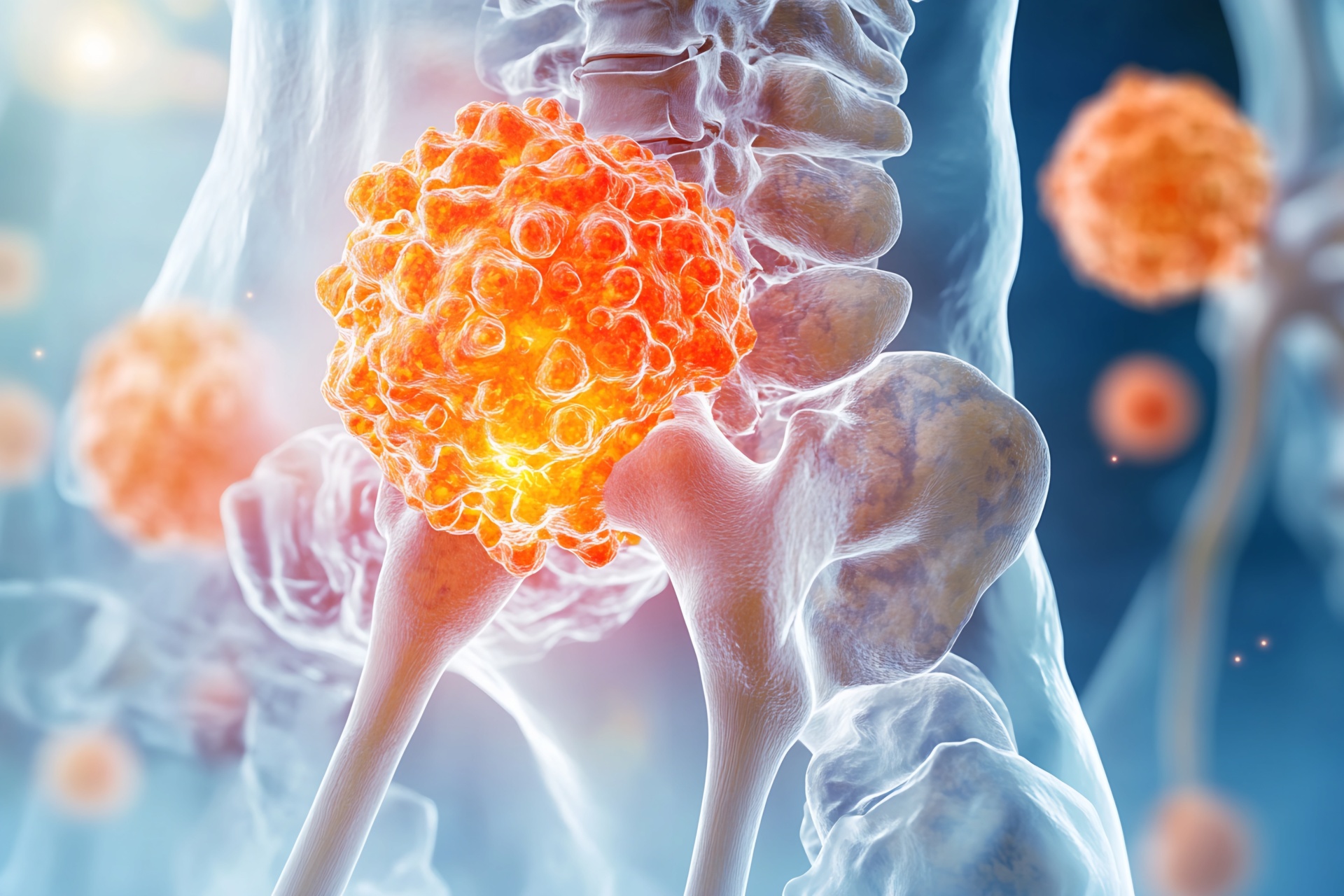
A sarcoma is a rare type of cancer that grows in the body’s connective tissues. This includes:
- Bones
- Muscles
- Fat
- Blood vessels
Because these tumors grow deep under the skin, doctors rely on specialized medical imaging to see what is actually going on.
How a CT Scan Helps
A CT scan is like a super-powered X-ray. Instead of taking one flat picture, it takes a 360-degree loop of images around your body. A computer then stacks these images into detailed crosssections, like looking at slices of a loaf of bread.
For a sarcoma patient, a CT scan does three critical jobs:
- Checking the Lungs (The Most Vital Job)
When certain sarcomas spread, they usually travel to the lungs first. A regular chest Xray can easily miss tiny, microscopic spots. A Chest CT scan can spot millimeter-sized changes very early, allowing doctors to act fast. - Checking Bone Strength
If a tumor is growing inside a bone, a CT scan shows exactly how much the bone has been weakened. This helps surgeons see if a bone is at risk of breaking and plan how to fix it safely. - Scanning Deep Inside the Belly
Some sarcomas grow deep inside the abdomen. CT scans are excellent at scanning this area, showing doctors if a lump is pressing against major organs, your stomach, or vital blood vessels.
What is it like to get a CT scan?
Getting a CT scan is completely painless, non-invasive, and usually takes less than 10 to 15 minutes. You just lie still on a motorized table that slides through a large, donut-shaped machine. You might be given a “contrast dye” (either as a drink or through an IV) to make the blood vessels and tumors pop out clearly on the screen.
How Monument Imaging Can Help You
When you are facing the uncertainty of a medical issue, you need fast answers and a team that treats you like a person, not just a number. If you are in the Jacksonville area, Monument Imaging provides the compassionate, high-quality care you need to get clarity.
- Advanced Multi-Modality Testing: Because evaluating sarcoma requires multiple types of imaging, Monument Imaging is equipped with both high-resolution CT scans for staging and detailed MRIs to check soft-tissue boundaries.
- Expert On-Site Radiologists: Every scan is interpreted by Board-Certified radiologists who understand the subtle differences between benign lumps and rare conditions like sarcoma.
- Fast Answers for Peace of Mind: Waiting for results is the hardest part. They offer flexible same-day or next-day appointments, and they deliver a detailed report to your doctor within 24 to 48 hours so you can start planning your next steps immediately.
Accredited Care: As an American College of Radiology (ACR) accredited facility, they meet the highest standards of safety and image quality.
You can reach out to:
📍 Monument Imaging & Diagnostic Center
1201 Monument Rd STE 101
Jacksonville, FL 32225
📞 (904) 855-0700
📧 info@monumentimaging.com
Trust Your Instincts
If you or a loved one has a deep lump that is steadily growing (larger than a golf ball) or a bone ache that keeps you awake at night and doesn’t get better with rest, don’t ignore it. Talk to your doctor, advocate for yourself, and consider reaching out to Monument Imaging to get the clear answers you deserve.
References:
- Garner, H. W., Wessell, D. E., Lenchik, L., Ahlawat, S., Baker, J. C., Banks, J., Demertzis, J. L., Moon, B. S., Pierce, J. L., Scott, J. A., Sharda, N. K., Surasi, D. S., Temporal, M., & Chang, E. Y. (2023). ACR Appropriateness Criteria® Soft Tissue Masses: 2022 Update. Journal of the American College of Radiology, 20(5), S234–S245. https://doi.org/10.1016/j.jacr.2023.02.009
Cited by: 12 - National Comprehensive Cancer Network. (2024). NCCN Clinical Practice Guidelines in Oncology: Soft Tissue Sarcoma. NCCN. https://www.nccn.org
- National Cancer Institute. (2023). Soft Tissue Sarcoma Diagnosis and Staging. U.S. Department of Health and Human Services. https://www.cancer.gov
- Monument Imaging & Diagnostic Center. (2026). Imaging Services and Patient Care. http://www.monumentimaging.com