When you hear the word mammogram, your mind probably goes straight to breast cancer.
That’s normal.
But here’s something not a lot of people talk about: mammography isn’t only about cancer. It’s also one of the best tools we have for understanding everyday breast changes, in both women and even men.
And if you’ve ever noticed something different in your body—a lump, a bit of swelling, or just something that doesn’t feel right, you know how quickly your mind can start to spiral.
Sometimes, what you really need isn’t just treatment.
You need answers.
So what does a mammogram actually do?
Think of a mammogram as a way to see what your hands can’t feel.
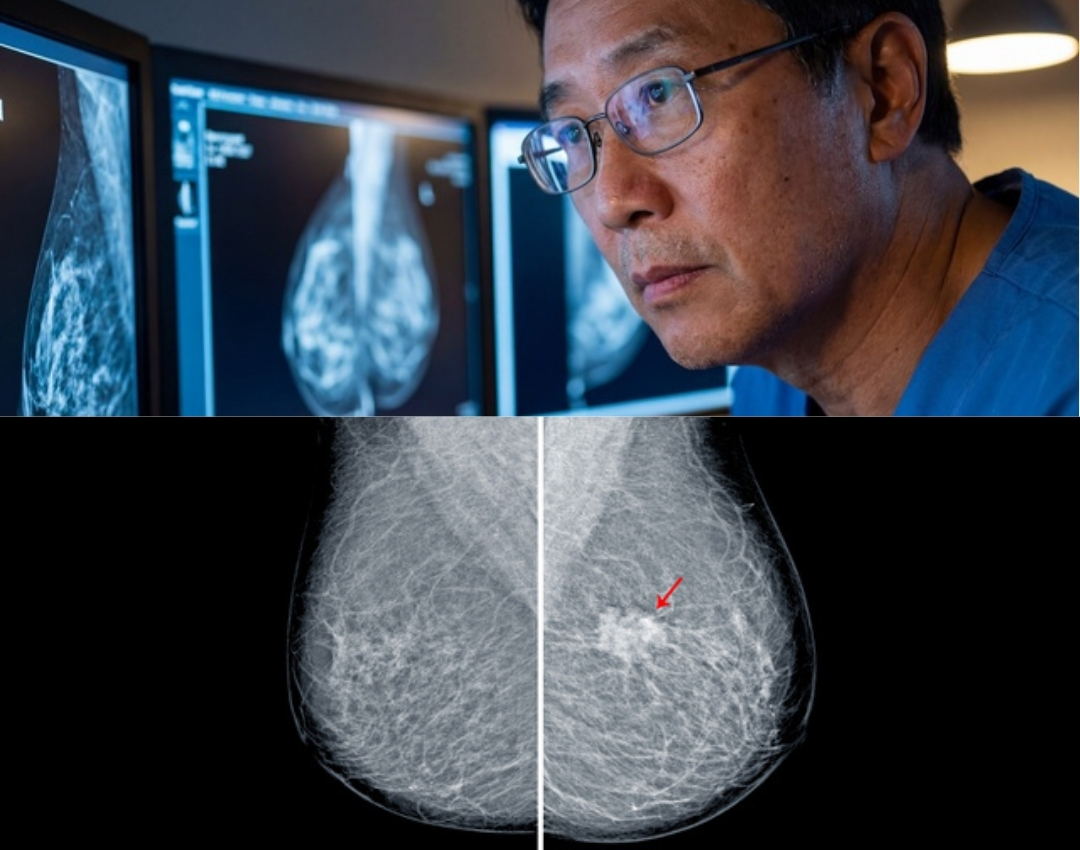
It’s a low-dose X-ray that looks closely at your breast tissue and helps healthcare providers figure out what’s going on beneath the surface.
You might need one if:
- You’re due for a routine check, even if everything feels fine
- You’ve noticed a lump, discomfort, or a change
It can pick up things like:
- Tiny calcium spots
- Small cysts
- Subtle tissue changes
These details help answer an important question:
Is this something harmless or something we need to look into further?
And catching things early, even small changes, can make a big difference (World Health Organization, 2014).
If you’ve felt something in your breast—this might be why
A lot of women go through breast changes at some point. Hormones, your cycle, even stress can affect how your breast tissue feels.
One very common cause is Fibrocystic Breast Changes.
If this sounds familiar, you’re not alone:
- Your breasts feel lumpy sometimes
- They get tender before your period
- There’s a heaviness or swelling that comes and goes
It can be scary at first. That moment when you think, “This wasn’t here before.”
But many of these changes are completely benign. A mammogram helps take the guesswork out. It shows whether what you’re feeling is something like a fluid-filled cyst or a normal tissue pattern, and that clarity can bring real relief (Mayo Clinic, 2023).
And yes, this applies to men too
This part surprises a lot of people.
Men have breast tissue too. And sometimes, they notice changes they weren’t expecting.
A condition called Gynecomastia is actually quite common. It’s a benign enlargement of breast tissue in men.
You might notice:
- Swelling in the chest
- Tenderness
- A firm area under the nipple
And if you’re a man experiencing this, you might hesitate.
You might think, “Is this even something I should get checked?”
The answer is yes. Not because it’s likely serious but because you deserve to know what’s going on in your body.
How a mammogram helps you get that clarity
Whether you’re a woman or a man, a mammogram helps turn uncertainty into something concrete.
It can:
- Confirm that a change is typical and benign
- Show the difference between fat and glandular tissue
- Catch anything unusual early
And most of the time? The result is reassuring.
But even when it’s not, you’re no longer guessing; you’re making decisions based on real information (American College of Radiology, 2022).
If you’re feeling nervous, you’re not alone
A lot of people feel uneasy before their first mammogram. That’s completely understandable.
At Monument Imaging & Diagnostic Center, the goal isn’t just to take images; it’s to take care of you.
That means:
- Explaining everything in a way that makes sense
- Moving at your pace
- Making sure you feel comfortable and respected
Whether you’re coming in for a routine check or because something feels off, you won’t be left wondering what’s happening.
You’ll be guided through it.
When you’re ready to take the next step
If you’ve noticed a change, or if it’s simply time for your routine screening, getting checked doesn’t have to feel overwhelming.
You can reach out to:
📍 Monument Imaging & Diagnostic Center
1201 Monument Rd STE 101
Jacksonville, FL 32225
📞 (904) 855-0700
📧 info@monumentimaging.com
Even a simple conversation can be the first step toward clarity.
Why this matters more than you think
It’s not always the condition that’s hardest to deal with.
Sometimes, it’s the waiting. The uncertainty. The “what if.”
Mammography helps you move past that.
From:
“I don’t know what this is…”
to
“Okay, now I understand.”
And that shift? It matters.
A different way to think about breast health
Breast health isn’t just about one disease. It’s about being aware of your body, noticing changes, and feeling confident enough to check things out.
Mammography supports that—for women and for men.
Because at the end of the day, this isn’t just about imaging.
It’s about giving you something solid to hold on to when things feel uncertain.
Sometimes, that’s a diagnosis.
But often, it’s something just as important:
Peace of mind.
References:
- World Health Organization. (2014). WHO position paper on mammography screening. https://iris.who.int/server/api/core/bitstreams/efbe53e5-9354-482d-8c75-94cc7a1110b4/content
- Mayo Clinic. (2023). Fibrocystic breasts – Symptoms and causes. https://www.mayoclinic.org/diseases-conditions/fibrocystic-breasts/diagnosis-treatment/drc-20350442?
- Mayo Clinic. (2023). Gynecomastia – Symptoms and causes. https://www.mayoclinic.org/diseases-conditions/gynecomastia/symptoms-causes/syc-20351793
- American College of Radiology. (2022). Practice parameter for the performance of diagnostic mammography. https://www.acr.org/-/media/ACR/Files/Practice-Parameters/screen-diag-mammo.pdf